

Hitting a frustrating plateau in your back growth is one of the most common challenges in the gym. You put in the work, you pull heavy weight, but the reflection in the mirror just doesn’t show the v-taper or dense, muscular thickness you’re training for. This stagnation is often fueled by a sea of conflicting advice online—an endless list of exercises without a clear strategy for targeting specific goals. Are you supposed to be pulling wide? Close? Underhand? Overhand? The confusion leads to guesswork, and guesswork is the enemy of progress.
This guide is different. This is a science-first blueprint that eliminates the noise. As a trainer with a B.S. in Sports Science and over 15 years of experience in evidence-based hypertrophy programming, I’ve seen what works, what doesn’t, and why. We will delve into the biomechanics of back training, using electromyography (EMG) data to identify the most effective movements for building a complete back—one that is both impressively wide and incredibly thick.
By the end of this article, you will have a clear understanding of your back’s anatomy, the most effective exercises for width and thickness according to scientific research, actionable techniques to finally master the mind-muscle connection, and a complete pull-day routine you can implement immediately to shatter your plateau.
The anatomy of a powerful back: width vs. thickness muscles
Back Growth – Defining your back-building targets
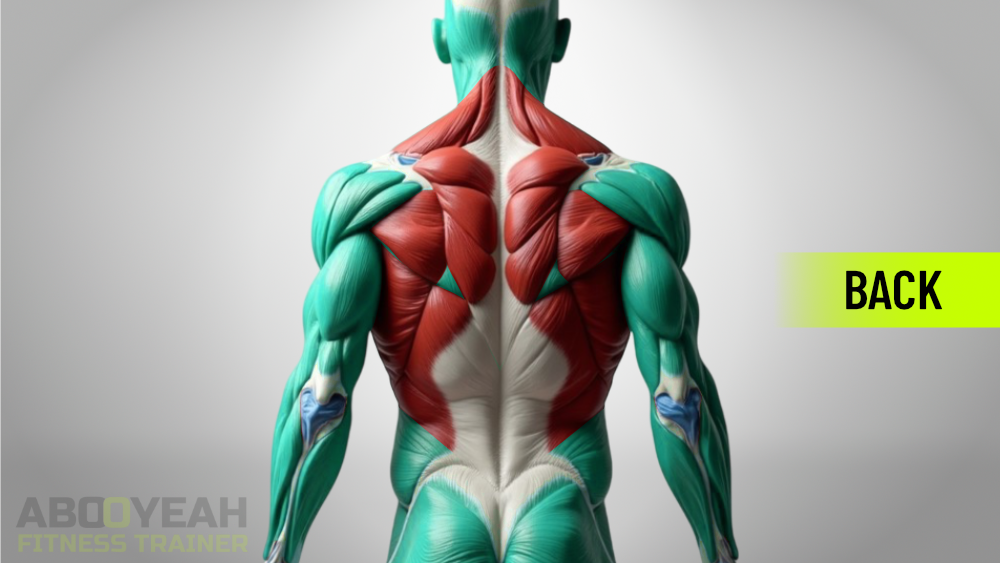
Before you can build a complete back, you must understand its components. A truly well-developed back is a combination of two distinct visual qualities: width and thickness. Think of it like a barn door. Width is how wide the door is from side to side, creating that coveted V-taper. Thickness is how dense and rugged the wood is, creating deep valleys and detailed muscle from your traps down to your spinal erectors. To build both, you need to target the specific muscle groups responsible for each quality.
The ‘width’ muscles: creating the v-taper
Back width is primarily created by the latissimus dorsi, or “lats.” These are the large, fan-shaped muscles that run from under your armpits down the sides of your back. Their primary functions are to adduct (bring the arm down towards the body’s midline), extend, and internally rotate the shoulder. When developed, they flare out, dramatically increasing your V-taper. Working in concert with the lats is the teres major, a smaller muscle that sits just above the lats and contributes significantly to the upper “shelf” of your back’s width.
The ‘thickness’ muscles: building dense upper and mid-back
Back thickness is the result of developing the muscles that lie in the upper and middle portion of your back, primarily the trapezius and the rhomboids. The trapezius muscle is a large, diamond-shaped muscle divided into three sections: upper, mid, and lower. Along with the rhomboids, these muscles are responsible for retracting the scapula (pulling your shoulder blades together), as well as elevating and depressing them. Developing this group creates the dense, gnarled look of a powerful back. While exercises like shrugs are key for the upper traps, horizontal pulling movements are essential for the mid-back. Finally, the spinal erectors run down your lower back, providing stability and contributing to the “Christmas tree” look in leaner individuals.
The science of selection: vertical pulls for width, horizontal pulls for thickness
Why movement pattern dictates muscle growth
The single most important principle for targeted back development is understanding that the direction you pull from determines which muscles are preferentially activated. This isn’t bro-science; it’s biomechanics. Choosing exercises based on their movement pattern allows you to stop guessing and start strategically targeting either width or thickness in your training.

Vertical pulls: stretching and activating the lats
Vertical pulling movements are any exercise where you pull a weight down from an overhead position. This includes pull-ups, chin-ups, and lat pulldowns. This movement path, known as shoulder adduction, places the latissimus dorsi under the greatest possible stretch at the top of the movement and aligns perfectly with its muscle fiber orientation for a powerful contraction. This makes vertical pulls the superior choice for lat hypertrophy and building back width. Foundational University of Wisconsin EMG study and subsequent ACE-sponsored EMG research on back exercises have repeatedly demonstrated that exercises like the pull-up elicit the highest levels of lat activation, confirming their status as a top width-builder.
Horizontal pulls: squeezing for scapular retraction and thickness
Horizontal pulling movements, or rows, are exercises where you pull a weight from in front of your body towards your torso. This includes bent-over rows, dumbbell rows, and seated cable rows. This movement path is defined by scapular retraction—the act of pinching your shoulder blades together. This action preferentially targets the rhomboids and mid-trapezius muscles, the primary drivers of back thickness. The same ACE-sponsored research highlights that rowing variations are unparalleled in their ability to activate these mid-back muscles, making them non-negotiable for building the dense muscle that signifies true back power.
Emg-proven exercises for maximum back width
The King of Back Muscles Width: How Pull-Ups and Chin-Ups Build Your V-Taper
According to EMG data, the weighted pull-up is consistently ranked as one of the top exercises for activating the latissimus dorsi. Its combination of a large range of motion, significant stretch, and high load potential makes it the undisputed king of width. The primary difference between a pull-up (pronated, overhand grip) and a chin-up (supinated, underhand grip) is the degree of bicep involvement; chin-ups engage the biceps more, while pull-ups tend to isolate the lats and brachialis more effectively. Both are phenomenal choices.
The lat pulldown: optimizing your grip for hypertrophy
For those who haven’t yet mastered the pull-up, the lat pulldown is the perfect scalable alternative. A common question is what grip width is best for hypertrophy. Fortunately, science has a clear answer. Peer-reviewed research on lat pull-down grip width published in the Journal of Strength and Conditioning Research found that a medium, pronated (overhand) grip slightly wider than shoulder-width consistently produces the greatest lat activation. Furthermore, a study on lat pull-down variations confirms that pulling the bar down in front of the neck is not only safer but also more effective for lat stimulation than the behind-the-neck variation.
Width-focused variations: the straight-arm pulldown
The straight-arm pulldown is a unique and powerful isolation exercise. By keeping your arms relatively straight (with a slight bend in the elbow), you almost entirely remove the biceps from the movement. This forces the lats to perform all the work of pulling the weight down. It is an exceptional tool for improving the mind-muscle connection and can be used as a pre-activation drill or a finisher to pump the lats full of blood at the end of a workout.

Emg-proven exercises for unmatched back thickness
The foundation of thickness: bent-over barbell rows
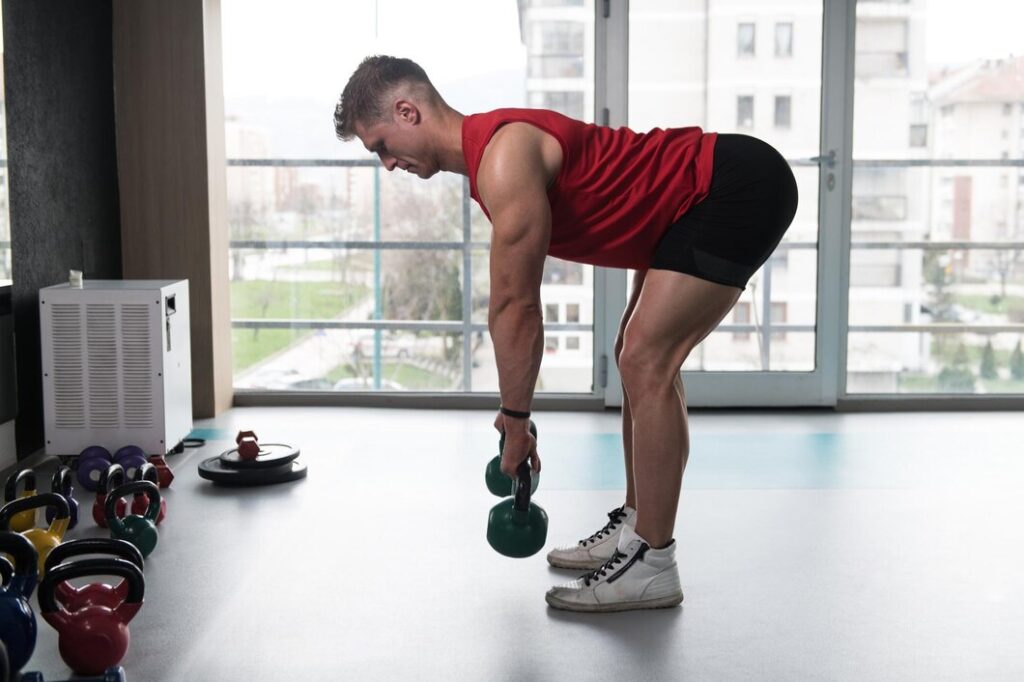
The bent-over barbell row is the quintessential mass-builder for the entire back, but it is particularly effective for building thickness. By hinging at the hips and maintaining a torso angle that is close to parallel with the floor, you create a perfect line of pull to engage the rhomboids, mid-traps, and even the lower lats and spinal erectors. To maximize activation and minimize lower back strain, focus on initiating the pull by retracting your shoulder blades and driving your elbows up and back.
Unilateral power: the dumbbell row
The single-arm dumbbell row offers several advantages over its barbell counterpart. Working one side at a time, known as unilateral training, allows you to correct strength imbalances and achieve a greater range of motion. You can get a deeper stretch at the bottom of the movement and a more forceful peak contraction by driving your elbow higher than you could with a barbell. This makes it a superior exercise for focusing on the “squeeze” and building dense mid-back muscle.
Targeted tension: seated cable rows and t-bar rows
Cable machines and T-bar rows offer unique ways to manipulate tension for thickness. On seated cable rows, changing the handle can shift the emphasis; a V-grip tends to bring in more of the lower lats, while a wide bar focuses more on the rhomboids and rear delts. Chest-supported variations, like a machine T-bar row or an incline dumbbell row, are fantastic for isolating the back. By supporting your torso, you remove the need for your lower back to act as a stabilizer, allowing you to focus 100% of your effort on squeezing and contracting your mid-back muscles.
The missing link: how to master the mind-muscle connection for your back
Why you can’t ‘feel’ your lats (and how to fix it)
This is the most common complaint I hear from lifters, and it’s a critical barrier to growth. You perform rows and pulldowns, but you only feel it in your biceps and forearms. This happens because your arms are evolutionarily programmed to pull. Overcoming this requires conscious effort to improve your neuromuscular control. The goal is simple but challenging: initiate every single pull with your back, not your hands. The cue that unlocks this is to think of your hands as simple hooks and focus on driving your elbows.
Pre-activation drills to wake up your back
Performing one or two of these simple drills before your main workout can dramatically improve your ability to feel your back working.
- Scapular Depressions: Hang from a pull-up bar. Without bending your arms at all, focus solely on pulling your shoulder blades down and back, lifting your body an inch or two. Hold the contraction for a second, then relax. This teaches you to initiate vertical pulls correctly.
- Banded Straight-Arm Pulldowns: Anchor a light resistance band to a high point. With straight arms, pull the band down to your thighs, focusing intently on squeezing your lats to move the band. This primes the exact muscles you’ll use in heavier lat work.
Actionable cues for perfect form on every rep
I once had a client, a strong guy who could row heavy weight but had very little back development to show for it. He was a classic “arm puller.” For weeks, we tried different cues. Then one day, I told him, “On this set of dumbbell rows, I want you to forget about the weight. Just imagine you are trying to tuck your elbow into the back pocket of your jeans.” The change was instantaneous. For the first time, he felt his lat contract powerfully. That single cue made all the difference.
- For Vertical Pulls: “Imagine pulling your elbows down into your back pockets.” and “Start the pull by setting your shoulder blades down and back first.”
- For Horizontal Pulls: “Imagine you’re trying to pinch a pencil between your shoulder blades at the top of the rep.” and “Drive your elbows back as far as you can, squeezing for a full second.”
The ultimate science-based pull day blueprint
Programming principles for sustained hypertrophy
Knowing the best exercises is only half the battle. To ensure continuous growth, you must apply sound programming principles.
- Frequency: Train your back 1-2 times per week, allowing for adequate recovery.
- Volume: The total number of hard sets you perform is a key driver of growth. The routine below provides an effective starting point.
- Intensity: This refers to the load you lift and the effort you expend. Aim to train close to muscular failure on most sets (leaving 1-2 reps in the tank).
- Progressive Overload: This is the non-negotiable key to growth. Each week, you must aim to do more than you did before—whether that’s adding 5 pounds to the bar, doing one more rep with the same weight, or adding an extra set.
The complete pull day routine
This routine is structured to incorporate the most effective EMG-proven exercises, starting with heavy compound movements and finishing with targeted isolation work.
| Exercise | Sets | Reps | Rest | Notes |
|---|---|---|---|---|
| Bent-Over Barbell Row | 3 | 6-8 | 90-120s | Focus on explosive pulling and controlled negative. |
| Weighted Pull-Ups OR Lat Pulldowns | 3 | 6-10 | 90s | Primary width movement. Choose the variation you can perform with perfect form. |
| Single-Arm Dumbbell Row | 3 | 8-12 per side | 75s | Focus on deep stretch and peak contraction. |
| Seated Cable Row (Wide Grip) | 3 | 10-15 | 60s | Squeeze shoulder blades together for 2 seconds at peak contraction. |
| Straight-Arm Pulldown | 2 | 15-20 | 60s | Mind-muscle connection focus. Feel the lats do all the work. |
| Face Pulls | 3 | 15-20 | 45s | For rear delts and upper back health. |
How to customize the blueprint for your goals
Unlike rigid, one-size-fits-all programs, this blueprint can be easily adjusted to prioritize your specific goals.
- To Emphasize Width: Move your vertical pull (Weighted Pull-Ups or Lat Pulldowns) to the first exercise in the workout. After completing the main routine, you can add two more sets of a different pulldown variation, such as a close-neutral grip pulldown.
- To Emphasize Thickness: Keep the Bent-Over Barbell Row as your first exercise. After completing the main routine, you can add two more sets of a different horizontal pull, such as a chest-supported T-bar row, to further target your mid-back.
Ready to Build a Wider, Thicker Back?
Frequently asked questions about back hypertrophy
What is back hypertrophy?
Back hypertrophy is the scientific term for the growth of muscle fibers in the various muscles of the back, leading to an increase in both size and strength. This is achieved through resistance training that progressively challenges the muscles, causing them to adapt and grow larger.
What are the best exercises for back thickness?
The best exercises for back thickness are horizontal pulling movements, or rows, that emphasize scapular retraction. According to EMG data, bent-over barbell rows, T-bar rows, and seated cable rows are exceptionally effective at activating the rhomboids and mid-traps, which build density in the mid-back.
How can I improve my mind-muscle connection with my back?
To improve your mind-muscle connection with your back, focus on initiating every pull with your elbows instead of your hands, perform pre-activation drills like scapular retractions before your workout, and use lighter weight to focus on squeezing the target muscle at the peak of every repetition.
Does grip width on pulldowns matter for hypertrophy?
Yes, grip width on pulldowns does matter for hypertrophy. Scientific research, including studies in the Journal of Strength and Conditioning Research, shows that a medium, pronated (overhand) grip slightly wider than the shoulders typically elicits the highest level of latissimus dorsi activation, making it ideal for building back width.
Stop guessing, start building your ultimate back
You no longer need to feel lost in your back training. The path to a bigger, stronger, and more complete back is paved with science, not speculation. By understanding the fundamental difference between width and thickness muscles, you can now select the right tool for the job—vertical pulls for a wider V-taper and horizontal pulls for dense, rugged thickness. You have the cues and drills to master the mind-muscle connection, ensuring every rep builds the muscle you’re actually targeting. Most importantly, you have a structured, progressive blueprint to apply this knowledge consistently.
The guesswork is over. You now have the knowledge and the plan to break through your plateau and build the powerful back you’ve been working for.
For more evidence-based guides to shatter your training plateaus, explore our complete guide to muscle groups.
About the author
Abooyeah Fitness Trainer is a certified personal trainer with a Bachelor of Science (B.S.) in Sports Science. With over 15 years of in-the-trenches experience, he specializes in creating evidence-based hypertrophy programs that help intermediate to advanced lifters break through plateaus and achieve their physique goals. His approach combines scientific principles with practical, real-world application to deliver sustainable and impressive results.